Introducing NiceTry: Quantum-Safe Wallet Infrastructure Built on Ephemeral Key Rotation
By Matteo Vena
NiceTry is our wallet infrastructure project, implementing a quantum-safe design for Ethereum wallets based on ephemeral key pairs and account abstraction. Instead of relying on a single long-lived signing key, the wallet rotates its signer after every transaction, discarding each key after a single use.
This article covers the design's origins, its current direction, and why ephemeral key rotation is relevant well beyond quantum safety.
The ephemeral key design
The design was first published by our CTO @matteVicari in Achieving Quantum Safety Through Ephemeral Key Pairs and Account Abstraction on ethresear.ch.
The mechanism works as follows: a smart wallet (ERC-4337 account) holds a current signer. When the user signs a transaction, the wallet validates the signature, executes the transaction, and atomically rotates, invalidating the current signer and setting the new signer. An attacker who extracts the signing key from a past transaction, for instance via a quantum computer breaking ECDSA, finds a key that no longer controls anything (nice try!). There is no key store growing over time: exactly one valid signer exists at any moment, and it changes with every use.
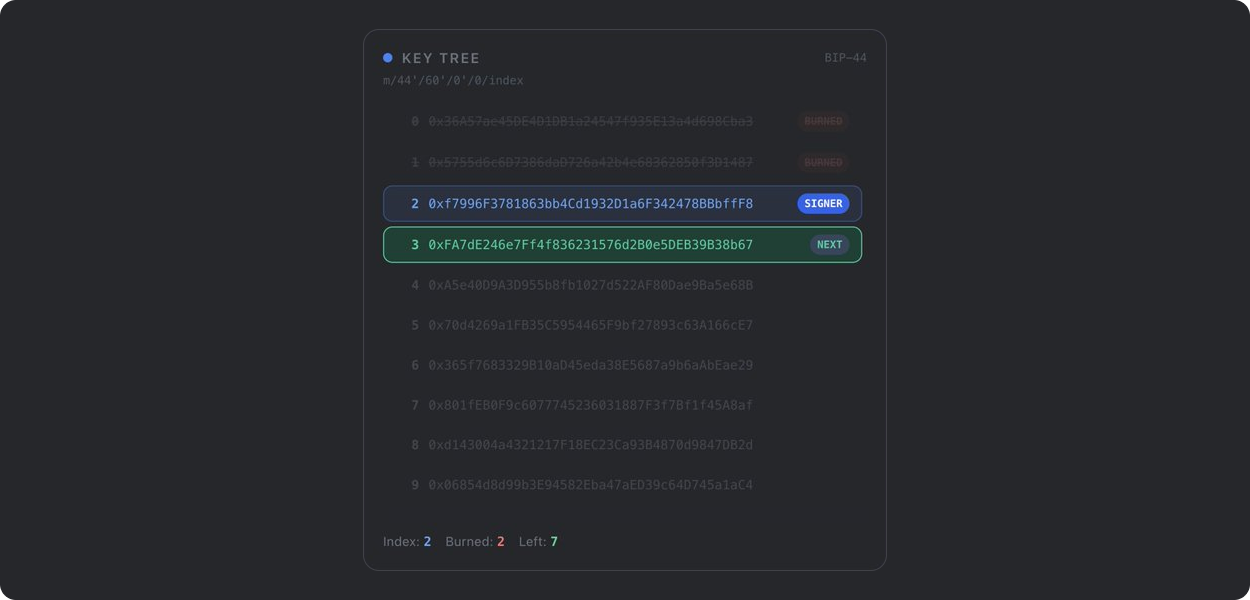
A screenshot from our wallet demo available at nicetry.xyz
NiceTry is designed as a practical solution for the present and near future, not as a permanent replacement for long-term cryptographic infrastructure.
Community feedback and the frame transaction variant
The design received significant attention from the Ethereum research community and was presented in the PQ call series organized by Ethereum Foundation researchers across multiple sessions.
Following our introductory research on frame transactions, our researcher @alebaiocchi23 published Native Ephemeral Key Rotation via Frame Transactions, a variant that implements key rotation with native AA at the protocol level using frame transactions.
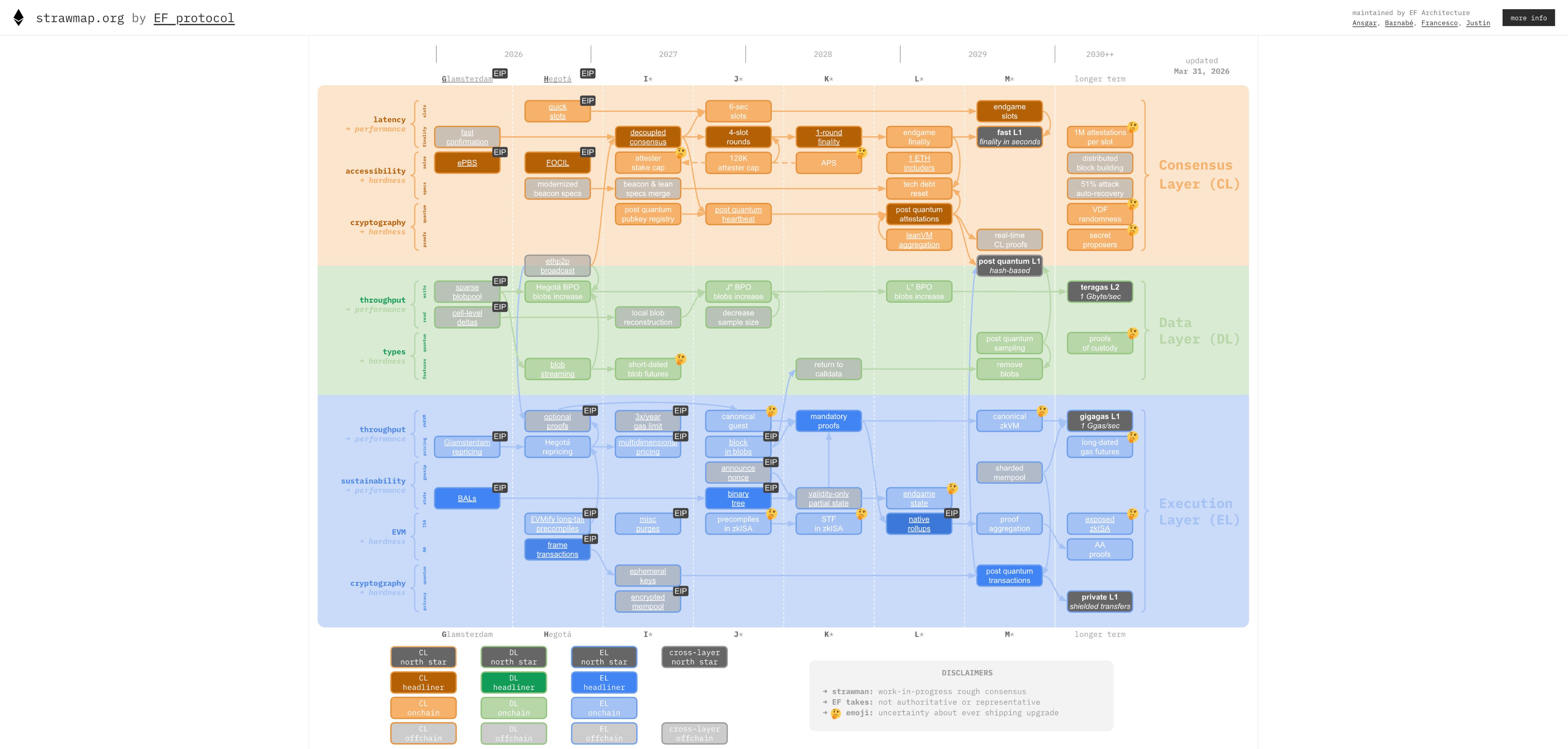
The Strawmap Roadmap
At ETHCC 2025 (Cannes), both the base design and the frame transaction variant were presented during the main event and at FortMode, and the ephemeral key approach has since been added to the Ethereum post-quantum strawmap.
PQ signatures and what we are currently building
Following conversations with researchers and builders at ETHCC, we began integrating post-quantum signature schemes directly into the ephemeral key design, with the current focus on WOTS+C (Winternitz One-Time Signature).
WOTS+C is a hash-based, one-time signature scheme that is conservative, well-understood, and quantum-resistant. Because each key pair must only sign a single message by construction, it is a natural fit for ephemeral key rotation where keys are already designed to be used once and discarded.
The work in progress covers integration of WOTS+C verification into the smart wallet validation logic, handling of edge cases such as failed rotations, race conditions, and key loss recovery, and compatibility with existing wallet infrastructure. We are in active dialogue with wallet teams on adoption paths, and initial documentation is available at docs.nicetry.xyz.
Alongside WOTS+C, we are evaluating a range of other post-quantum signature schemes to determine which combinations best serve different wallet configurations and threat models, and to account for failure scenarios.
Beyond quantum safety
Ephemeral key rotation is a general-purpose security primitive. Quantum safety is the most pressing application, but the same mechanism has implications for key compromise containment, wallet infrastructure design, and DeFi operations where isolating each action from previous ones is desirable. We are actively researching and testing several of these directions and will share more as the work matures.
Follow the project on X for updates: @nicetry_xyz.